
Living in Australia on a student visa
Australian student visa requirements at different ages: work limits, courses, health insurance, initial budget and monthly living costs.
26 August 2026 · 14 min read
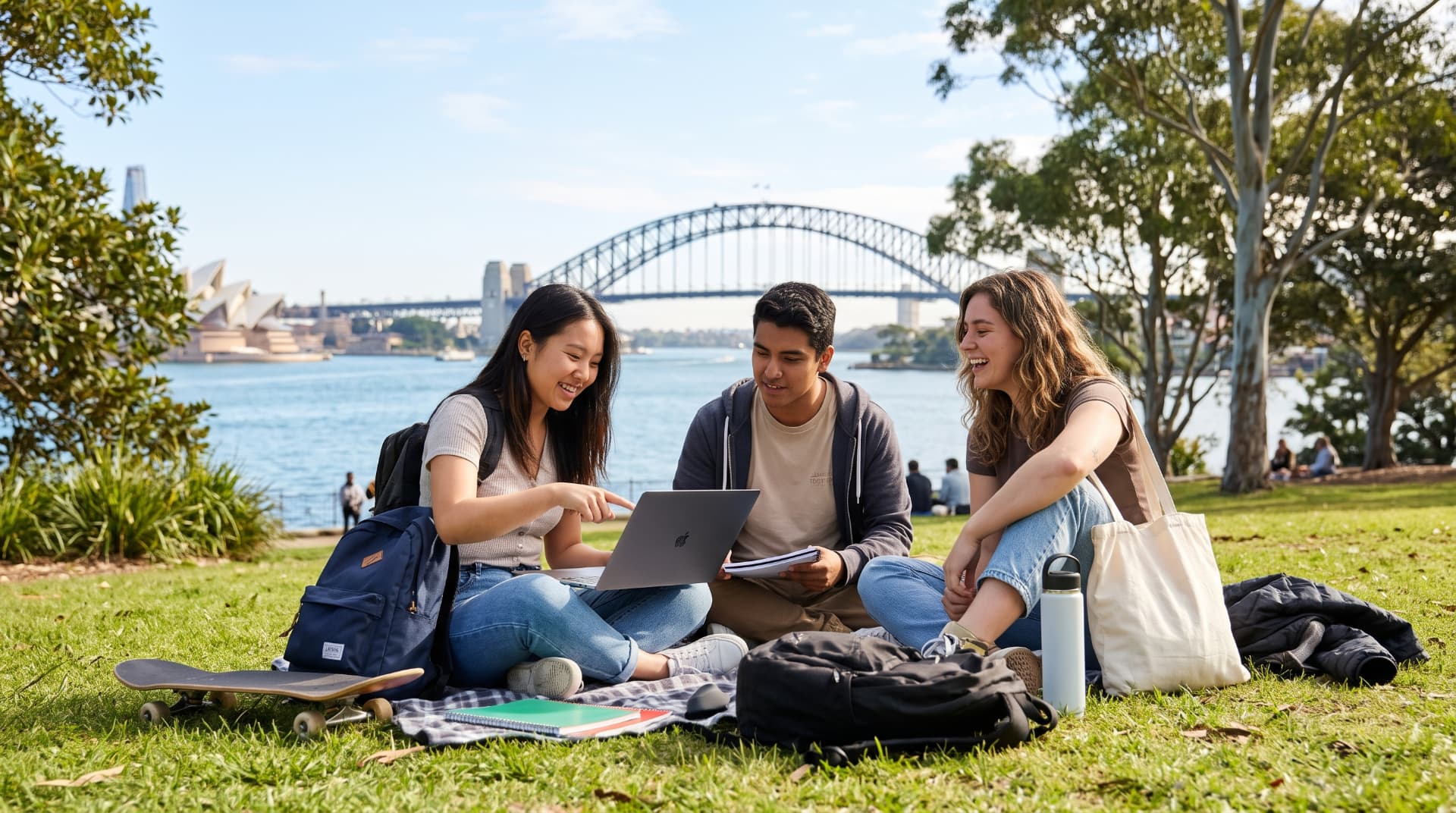
Living in Australia on a student visa can be an option for people of different ages who genuinely want to study, including those over 30 who are no longer eligible for a Working Holiday visa. There is no general upper age limit, but tuition, insurance, financial requirements and work limits make careful planning essential.
Australian visa options and age
| Visa | Age | Work | Main requirement |
|---|---|---|---|
| eVisitor 651 | No general upper limit | No | Eligible passport; temporary visits of up to three months per entry |
| Work and Holiday 462 | Up to 30 for Spain | Yes | Country-specific eligibility and any applicable cap |
| Student 500 | No general upper limit | Yes, limited during study | Enrolment, funds, insurance and Genuine Student requirement |
| Sponsored visa | Depends on the category | Yes | Eligible occupation and employer sponsorship or nomination |
Being 40 does not prevent you from applying for a student visa. Your age and background may affect how the purpose of your studies is assessed: the course should fit your education, experience and goals, rather than serve only as a way to work.
Student visa requirements
- Confirmation of Enrolment: confirmed enrolment in a CRICOS-registered course.
- Genuine Student: documented reasons for choosing the course, provider and Australia, and how the studies fit your background and plans.
- Financial capacity: funds for travel, living expenses and tuition. Official amounts are updated periodically.
- OSHC: Overseas Student Health Cover for the required period, unless an exemption applies.
- English: evidence of the level required by the course and, where applicable, the visa.
- Health and character: medical examinations and police certificates may be requested.
Fees, minimum funds and accepted tests change. Confirm the figures with the Department of Home Affairs before paying non-refundable tuition.
PDF guide in Spanish · €6.90
Australia after 30
A clear explanation of the student visa, the money you need, city comparisons and my experience in Byron Bay and Thredbo. The downloadable PDF is in Spanish.
View the Spanish-language guideHow many hours can you work?
The general rule allows up to 48 hours per fortnight while your course is in session, and unlimited hours during scheduled course breaks. You cannot start working before your course begins. Certain research degrees have different conditions, and accompanying family members may have their own restrictions.
Your employer must comply with Australian employment rules, including payslips, tax and required contributions. A temporary visa does not reduce your workplace rights. Check the minimum wage and industry award rates with the Fair Work Ombudsman, as they are reviewed each year.
Choosing a course
- ELICOS English: useful for language improvement, but you should be able to explain its professional value and your reasons for enrolling.
- VET: vocational education in a specific field. Check the provider’s quality and the practical value of the qualification.
- Undergraduate or postgraduate study: a larger investment, more demanding academic entry and possible later options depending on the programme.
- Research: a research master’s or doctorate has its own admissions process and specific work conditions.
Do not choose solely on price or timetable. Check that the provider and course are registered on CRICOS, review attendance requirements and refund terms, and make sure the qualification supports a clear professional goal.
Initial budget and first-year costs
Indicative ranges for one person, expressed in euros:
| Item | Estimate |
|---|---|
| English or VET course | €6,000–14,000 |
| University or postgraduate course | €14,000–30,000 or more |
| Visa application | Current official fee |
| Annual OSHC | €400–800 |
| Flight from Spain | €800–1,500 |
| Getting settled and rental bond | €1,500–3,000 |
| Reserve for the first few months | €4,000–7,000 |
Monthly spending by city
| Item | Sydney / Melbourne | Adelaide / Perth / Brisbane |
|---|---|---|
| Room in shared accommodation | €800–1,300 | €650–1,050 |
| Food | €350–500 | €320–450 |
| Transport | €100–170 | €80–140 |
| Utilities and phone | €100–170 | €90–150 |
| Leisure and miscellaneous | €180–350 | €150–300 |
| Total | €1,530–2,490 | €1,290–2,090 |
Part-time work may cover some everyday costs, but it should not be your plan for paying all your tuition. Arrive with enough savings for several months: finding a room and a job can take time, and initial payments include a bond, transport and course materials. These budget estimates do not replace the official visa financial-capacity requirements.
Which city should you choose?
- Sydney: a large job market and education sector, with high rents.
- Melbourne: lively university, cultural and hospitality scenes; expensive housing and changeable weather.
- Brisbane: warm weather, growth and costs that can be more moderate than Sydney’s.
- Adelaide: manageable size, generally lower rents and a quieter pace.
- Perth: high wages in some industries and good quality of life, but a long way from the country’s other major cities.
Common jobs alongside your studies
Hospitality, retail, customer service, cleaning, logistics and care work offer many roles that can fit around classes. You will need a Tax File Number and bank account. Some roles require RSA for alcohol service, a White Card for construction, or specific checks for care and education.
A preparation timeline
- Six months before: define your goal, city and budget; compare CRICOS courses.
- Five months before: apply for admission, review terms and prepare your Genuine Student evidence.
- Four months before: obtain enrolment confirmation, arrange OSHC and gather financial evidence.
- Three months before: lodge the application and complete any requested checks. Processing times vary.
- After visa approval: buy your flight and book temporary accommodation; do not assume an arrival date before the decision.
- On arrival: arrange your TFN, phone, bank account and longer-term housing search.
For country information, explore the Australia section of the Terris Wild app.
Frequently asked questions
Can I apply at 40?
Yes. There is no general upper age limit for the student visa, although your study plans must make sense in the context of your background.
Can I support myself by working while studying?
Part-time work may help with monthly spending, but work limits and tuition costs mean you need savings before you arrive.
Does OSHC cover everything?
Not necessarily. It provides required health cover, but limits, exclusions and services differ. Check repatriation, dental care, optical care and pre-existing conditions.
Does a student visa let me stay afterwards?
Not automatically. Later options depend on your qualification, age, occupation, experience and the migration rules in force when you finish.